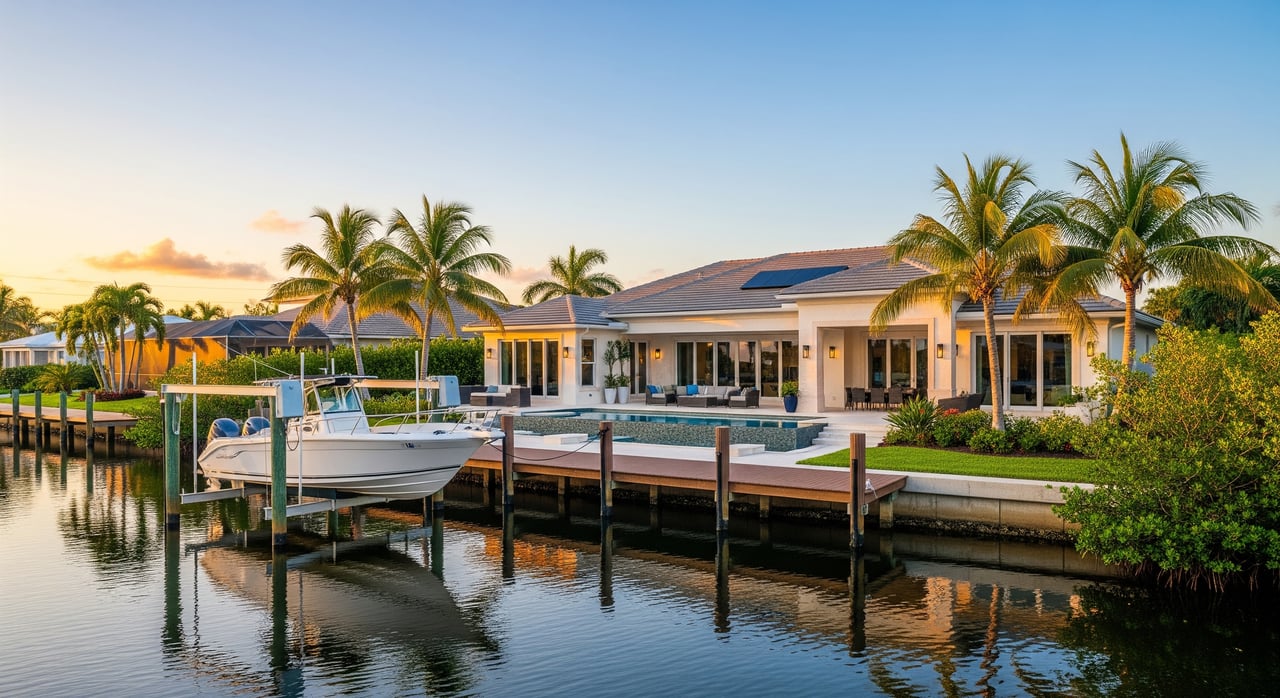
Dreaming of tying up your boat behind your home in Punta Gorda? Canal-front living can be fantastic, but the details matter. Canal depth, bridge clearances, seawall condition, and HOA or permit rules can make or break daily life on the water. In this guide, you’ll learn the key factors that affect boating access, maintenance, insurance, and costs so you can buy with confidence. Let’s dive in.
Understand Punta Gorda canals
Canal layouts and access
Punta Gorda’s residential canals are man-made or dredged channels that connect neighborhoods to larger waterways like the Peace River and Charlotte Harbor. Some canals are short cul-de-sacs with limited turning room, while others are through-channels that let you pass through to other canals. The layout affects your boat maneuvering, privacy, and how easily guests can approach your dock. Ask how the canal you’re considering connects to Charlotte Harbor and the Gulf of Mexico and what the typical route looks like.
Travel time to open water depends on the canal’s width and depth, the number of connecting channels, and local speed zones. Most small to mid-size powerboats are well suited to many residential canals. Larger yachts need deeper and wider canals, so match your boat’s length and draft to the specific canal conditions.
Tides, wake, and wildlife zones
Canals connected to Charlotte Harbor experience tidal variations that can affect depth and wake. Southwest Florida tides are generally modest, but it’s smart to check local tide information for low-water access. Seasonal conditions, storms, and shoaling can change depths over time. Many areas include manatee protection and no-wake zones that may influence your route and timing.
Bridge clearance and boat size
Fixed bridges and low overhead utilities in certain neighborhoods limit mast height and vertical clearance. If you own a sailboat or tall flybridge, confirm the vertical clearance along your entire route to open water. Some routes include fixed highway bridges with posted clearances, while smaller community bridges may be private. If clearance is tight, explore alternative routes or different canal systems that accommodate your vessel.
Docks, lifts, and seawalls
Common dock and lift setups
Private docks in Punta Gorda are typically fixed on pilings, though floating sections are sometimes used. Many owners install boat lifts to protect hulls and simplify maintenance. Lifts have size and weight ratings and require permitted electrical service. If you plan to add or upgrade a lift, ask for the current specifications, permits, and any electrical inspection records.
Seawalls and shoreline care
Seawalls separate the yard from the canal and are usually concrete, steel sheet piling, or modular wall systems. Service life varies by material and installation, so routine inspection is essential. Look for signs of settlement, cracking, sinkholes behind the wall, or leaning pilings. Some sites may support “living shoreline” approaches that use native vegetation, but feasibility depends on existing development and site conditions.
Dredging and who pays
Shoaling can reduce canal depth over time. Responsibility for dredging varies by location. It can be public if the canal is a maintained county or municipal channel, shared under an HOA or Community Development District, or an individual homeowner’s responsibility for a private slip. Dredging requires permits and can be expensive, so review past dredging records and understand who funds maintenance.
Permits and protected resources
Work on docks, lifts, seawalls, mangroves, or dredging typically involves multiple agencies. State permits often run through the Florida Department of Environmental Protection. Federal permits may involve the U.S. Army Corps of Engineers if navigable waters or wetlands are affected. Local building permits and code compliance come through Charlotte County or the City of Punta Gorda, and boating speed rules and manatee protection are managed by the Florida Fish & Wildlife Conservation Commission. Confirm any past or active permits, inspections, or violations before you close.
HOA rules, insurance, and costs
HOA and community rules
Some canal-front neighborhoods have HOA or CDD requirements. Architectural review may be needed for docks, lifts, or seawall work. Rules can limit boat size or type, the number of boats, or where you can store trailers. Maintenance or special assessments may cover dredging or shared seawall replacement, so read community documents and recent meeting minutes carefully.
Insurance to budget for
Flood insurance is typically required by lenders if any part of the property is in a Special Flood Hazard Area based on FEMA flood maps. Wind and hurricane coverage often carries a separate deductible in Florida, and coastal exposure can influence premiums. Many homeowner policies do not cover routine dock or seawall wear, so ask about endorsements or separate coverage. If you insure your boat and lift, your carrier may require specific safety measures and maintenance documentation.
Financial tradeoffs and resale
Waterfront homes often carry a price premium compared with similar inland properties. Ongoing costs can be higher due to seawall and dock maintenance, possible dredging, and insurance. While the buyer pool for waterfront is more specialized, demand for Florida waterfront living remains strong in many markets. Use local comps and property appraiser data to understand pricing and resale potential for your specific canal.
Risk, resilience, and title
Storm surge and evacuation
Canal-front properties can be more exposed to storm surge and wind damage to marine structures. Higher site elevations and sturdy seawalls help, but do not eliminate risk. Review local evacuation zones and historical surge maps for context. Ask for recent post-storm photos or reports to see how the property and canal performed during severe weather.
Riparian rights and easements
Confirm riparian rights and any easements that affect the shoreline or dock. Verify that the existing dock and seawall are permitted and located on the owner’s property. A thorough title review should surface any recorded maintenance agreements, shared costs, or covenants. This is especially important if your property relies on shared seawall segments or community docks.
Key questions to ask
Canal and boating access
- Is the canal direct to Charlotte Harbor or connected through other canals? What is the typical route and transit time to open water?
- What are the measured depths at mean low and mean high water? Are there recent surveys or soundings?
- Are there fixed bridges or overhead obstructions on the route? What is the posted vertical clearance?
- Are there manatee zones, no-wake areas, or speed limits that affect your travel time?
Dock and seawall
- When were the dock and seawall installed or last replaced? Are there inspection reports?
- Who is responsible for dredging and ongoing maintenance: homeowner, HOA/CDD, or county?
- Are there active permits or open violations for the dock, lift, or seawall?
- What are the lift specs and capacity? Is the electrical service permitted and up to code?
Regulatory and environmental
- Have any permits been issued in the past 10 years for mangrove trimming, seawall repair, dredging, or dock work?
- Is the property in a protected habitat area that limits modifications?
Financial and insurance
- Is any portion of the property in a FEMA Special Flood Hazard Area? Can you review the FIRM panel and an elevation certificate?
- What are recent premiums for homeowner, wind, and flood coverage? Any wind mitigation credits?
- Are there HOA/CDD fees for canal maintenance or planned special assessments?
Practical living
- What is typical boat traffic and noise on weekends and holidays?
- Any pest concerns like mosquitoes and what does county vector control do in the area?
- Are utilities public sewer or septic? How does the lot drain during heavy rain? Any history of yard flooding?
Quick buyer checklist
- Confirm canal depth and width with a recent survey or depth sounding.
- Verify seawall and dock age, condition, and permits.
- Identify who pays for dredging and seawall repairs.
- Check FEMA flood map status, obtain an elevation certificate, and get insurance quotes early.
- Review HOA/CDD rules for docks, boat size, and assessments.
- Confirm bridge clearances and travel time to Charlotte Harbor.
- Request recent post-storm photos or reports.
- Get a title and plat review for easements and riparian rights.
Local pros and agencies to consult
- Charlotte County Building Division and Public Works for canal management and permits
- City of Punta Gorda Planning and Zoning and Building Department for properties in city limits
- Florida Department of Environmental Protection for coastal permits and mangrove guidance
- U.S. Army Corps of Engineers for federal permits involving navigable waters and wetlands
- Florida Fish & Wildlife Conservation Commission for manatee zones and boating rules
- FEMA for Flood Insurance Rate Maps and flood risk data
- NOAA for tide and water level information and nautical charts
- Local marina operators, marine contractors, and surveyors for on-the-water depth and route knowledge
- Marine surveyor or licensed surveyor for depth soundings and dock/seawall condition reports
- Local insurance broker experienced with coastal Florida risks
- Real estate attorney for title, easements, and riparian rights
- HOA management for canal maintenance history and assessments
Buying canal-front in Punta Gorda is about matching your lifestyle and boat to the right canal, then verifying the details: depth, clearances, seawall health, permits, and insurance. With the right due diligence and local experts, you can enjoy smooth access to Charlotte Harbor and peace of mind at home. If you want a hands-on guide who knows Punta Gorda canals and the permitting landscape, connect with Chadwick Knight for local buyer representation and a practical plan from search to closing.
FAQs
How long does it take to reach Charlotte Harbor from a Punta Gorda canal home?
- It depends on the canal’s connection, depth, bridge or no-wake zones, and your route; ask for recent depth info and a typical transit estimate from the seller or a local marina.
Can my sailboat or tall flybridge clear Punta Gorda bridges?
- Some routes include fixed bridges that limit mast height; confirm posted vertical clearances along your exact route before you buy.
Do I need flood insurance for a canal-front home in Punta Gorda?
- If any part of the property is in a FEMA Special Flood Hazard Area, lenders typically require flood insurance; verify with flood maps and an elevation certificate.
Who maintains the seawall and handles dredging near my dock?
- Responsibility can fall to the homeowner, HOA/CDD, or county depending on the canal; review community documents and past dredging records.
What permits are required to add a boat lift or modify a dock?
- Dock and lift work usually needs local building permits and may require state or federal approvals; confirm requirements and existing permits before starting.
Are canal-front homes noisier or more prone to pests?
- Boat traffic and seasonal use vary by canal, and mosquitoes can fluctuate with weather; visit at different times and ask about county vector control measures.